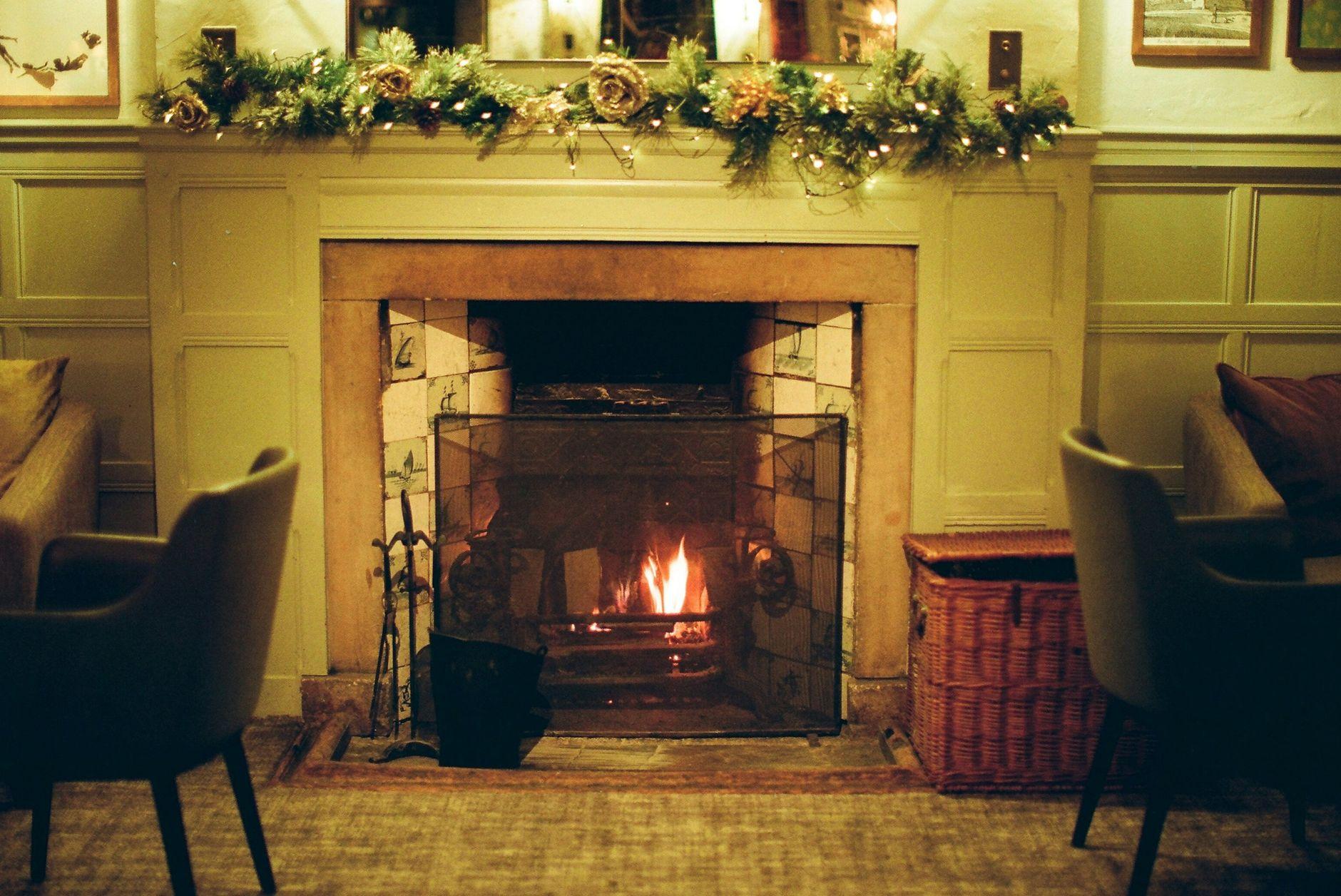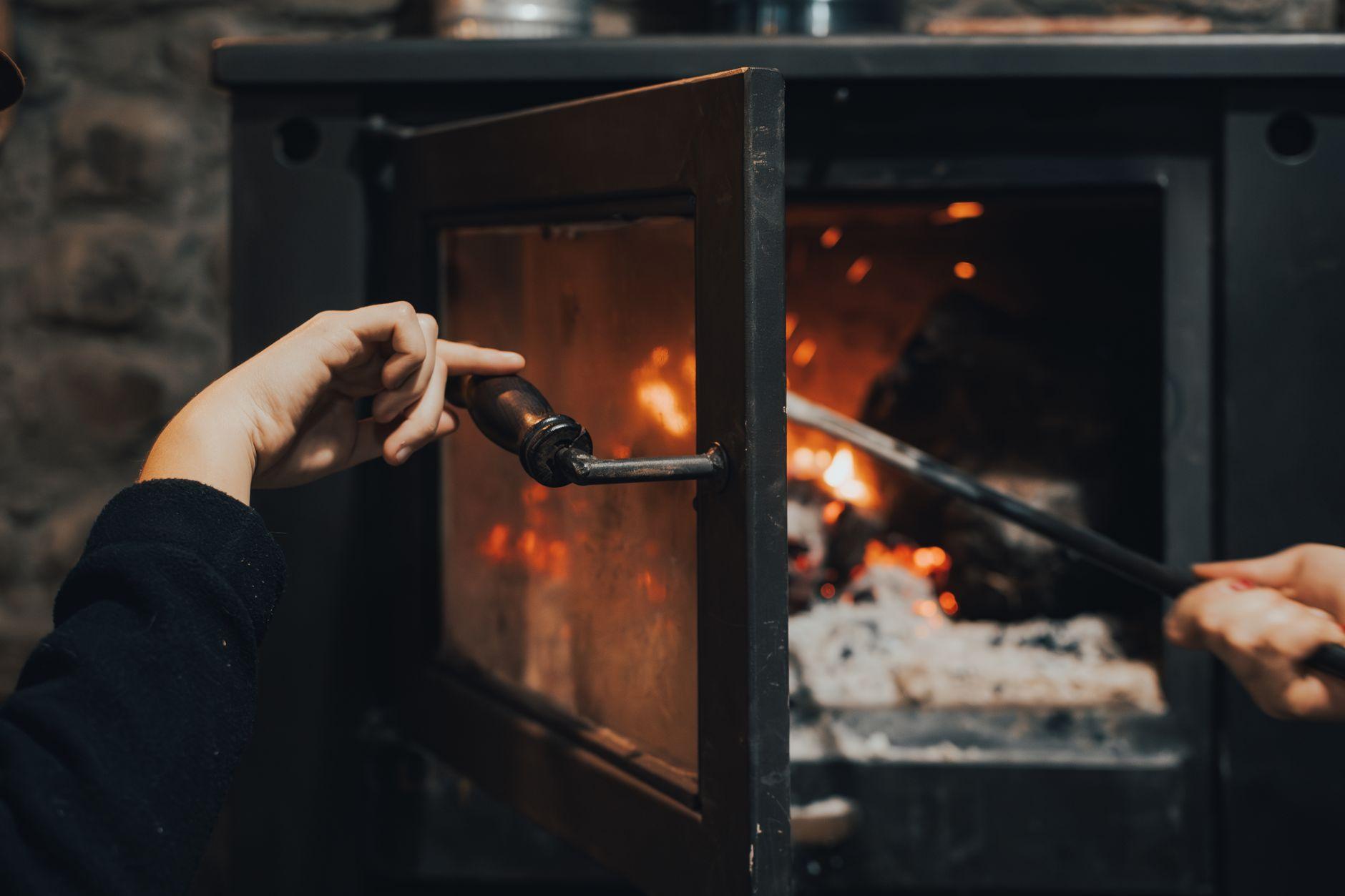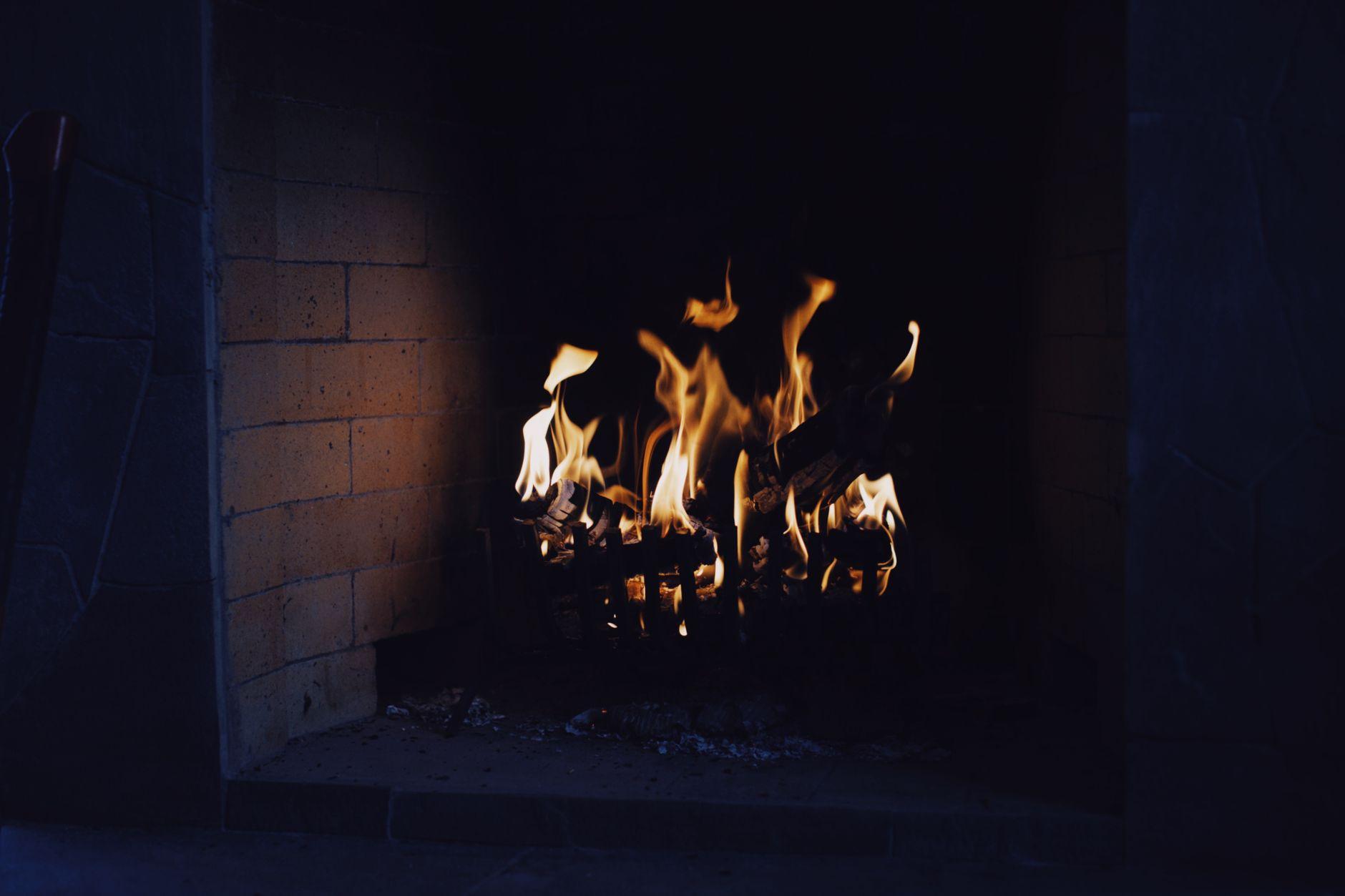
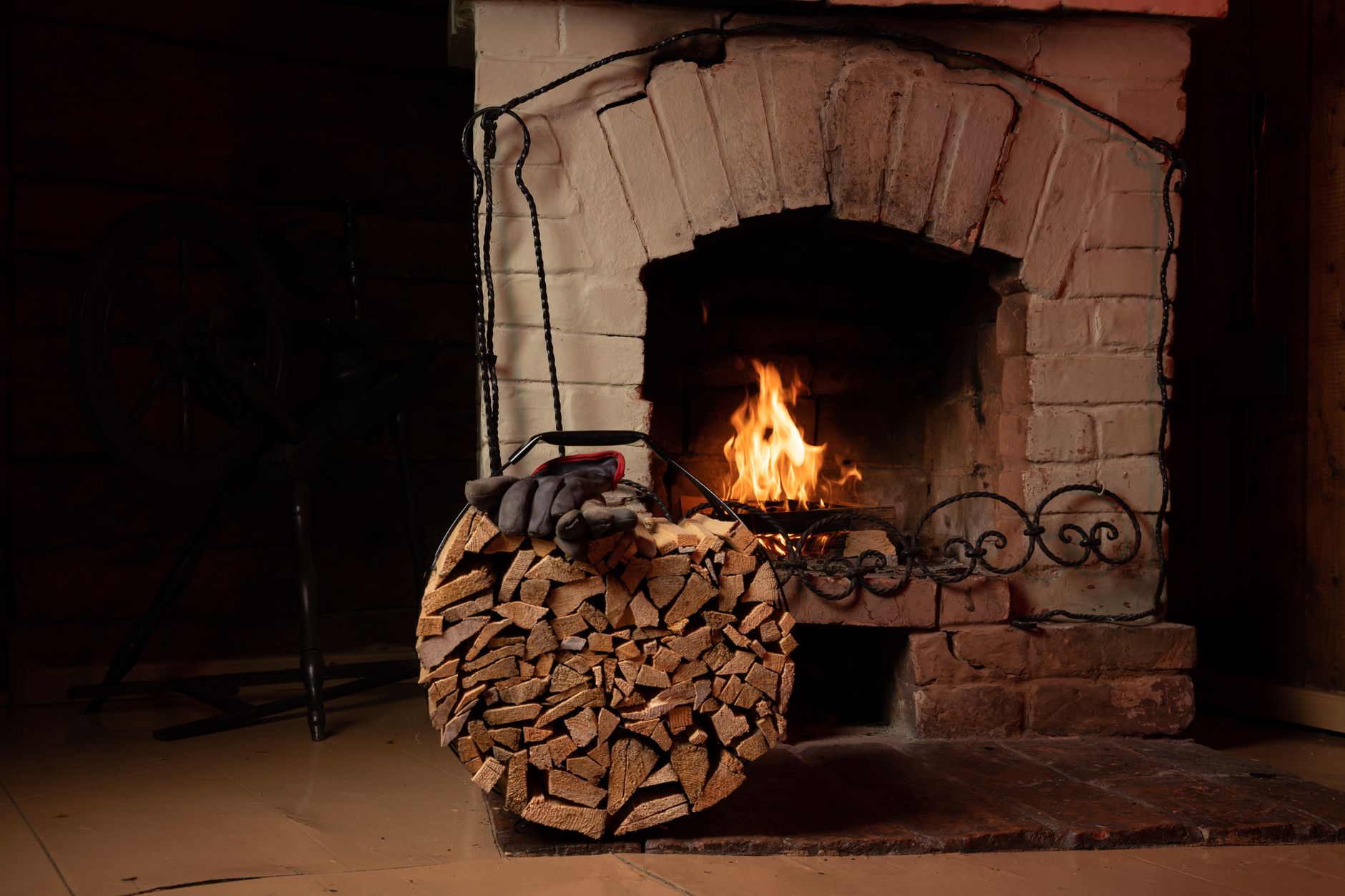
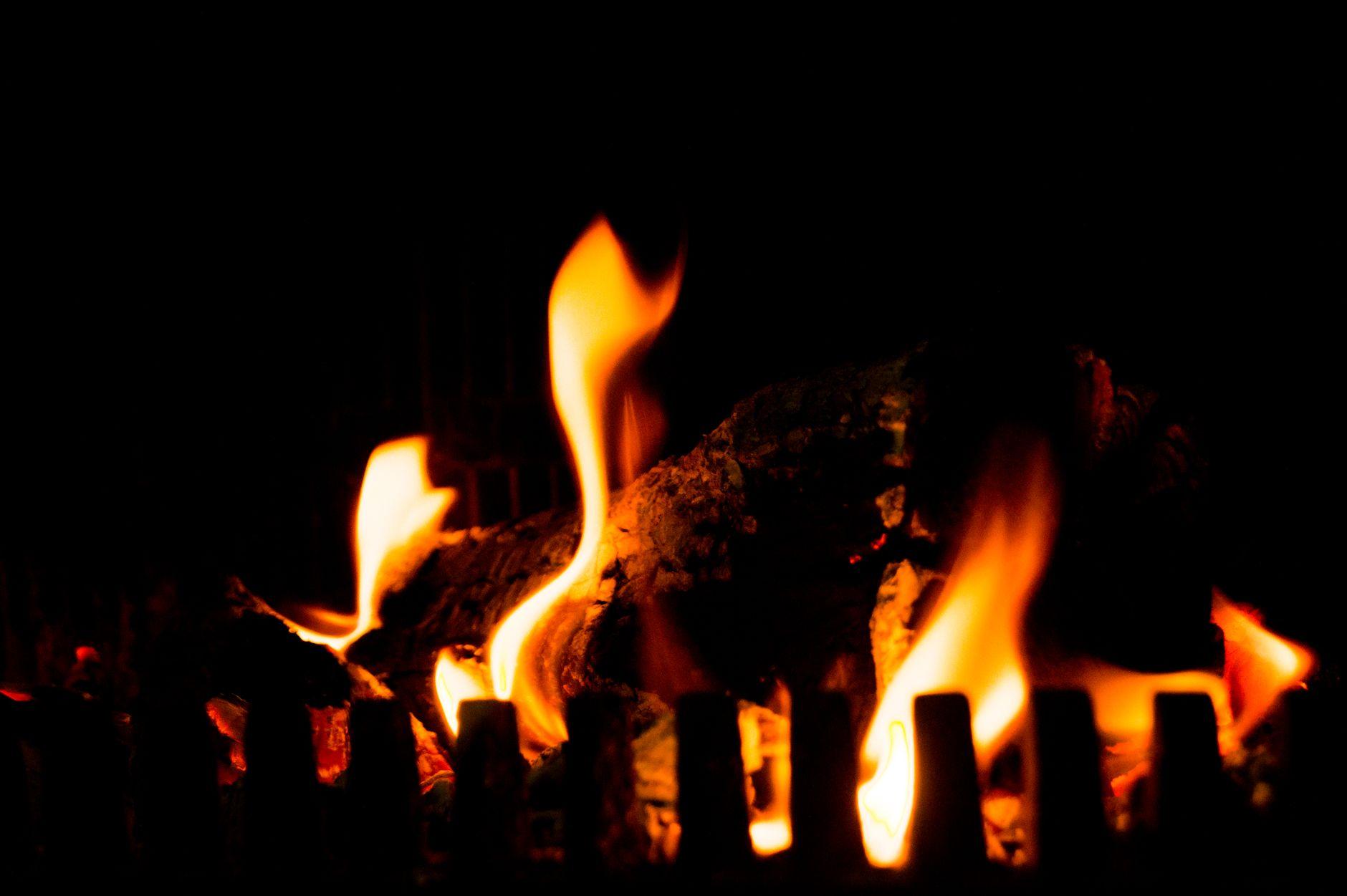
Same logs on display, opposite jobs
On a showroom floor the two sets sit side by side, ceramic logs on a steel grate, flame licking through. Pick one for an open brick fireplace and you are choosing between two different ideas about where the exhaust goes. That decision drives the price, the paperwork and how you use the fire.
Bluff Chimney Pros fits log sets in brick fireplaces across San Gabriel, Rosemead and the Los Angeles neighborhoods nearby. Here is how the two compare from where we stand, kneeling at the hearth.
How a vented set works
A vented set burns with a tall, lazy, yellow flame that looks like a wood fire. It is tuned to burn rich, which makes the flame pretty and the exhaust dirty, so all of it has to go up the chimney. That means:
- The chimney has to be sound and clear, with no blockage, nest or heavy wood soot.
- The damper is clamped in the open position so it can never close on a lit set.
- Most of the heat goes up the flue with the exhaust. A vented set is for the look and the glow, not for heating the room.
The upside is that the flue does the work, so the set is forgiving about room size and you can enjoy a big flame with the house closed up.
How a vent-free set works
A vent-free set burns hot and blue, close to how a kitchen range burns. It is designed to release its exhaust into the room, which means:
- A pilot safety called an oxygen depletion sensor cuts the burner if the air around it grows thin.
- Makers set limits on how small a room it can go in and how many hours it should run.
- It adds water vapor to the room, which can fog windows and dampen walls in a tight house.
- Smells from dust, paint or cleaning products in the room burn off into the air you breathe.
Nearly all of its heat stays in the room. That is its selling point.
What that means in California
California is far stricter about unvented gas appliances than many other states, and installs that are routine elsewhere are often not allowed here. Before we suggest any set for your hearth, we check what applies to the house and the room. For most of the brick fireplaces we see around San Gabriel, that check leads to a vented set or, if real heat is the goal, a sealed insert. Our post on an insert versus a new direct vent unit covers that path.
Side by side
- Flame: vented is tall and yellow; vent-free is shorter and bluer.
- Heat into the room: vented gives a little; vent-free gives most of it.
- Damper: fixed open for vented; vent-free sets follow whatever the maker's manual says about the damper.
- Chimney: must be sound for vented; still matters for vent-free if the damper stays open at all.
- Room limits: few for vented; strict for vent-free.
- Soot risk: vented sets soot if the logs are set wrong; vent-free sets soot if they run short of air.
What decides the price
Our gas logs work has no single published price, because the set itself is the largest part of the bill and they vary a lot. These are the things that move it:
- The set. Log count, log material and burner type, from a basic pan burner to a wider burner with glowing embers.
- How it lights. A match-lit set is the simplest. A standing pilot with a control valve costs more. A remote or wall switch adds a receiver and wiring.
- The gas supply. If a gas key already sits at the hearth and the line is sound, the hookup is short. If a line has to be run from elsewhere in the house, that adds labor.
- The chimney. A firebox that burned wood for decades often needs a sweep first; ours are from $405. A Level 1 look at the flue and damper is $53, and a camera run of the whole flue is $375 if the tile is in question.
Once we have looked at the firebox and the line, you get the set, the hookup and any chimney work listed line by line, so you can pick from it.
Ask for a log set quote. Say whether the fireplace burns wood now, whether there is already a gas key at the hearth, and how you want to use the fire: for the look, or for heat.
Signs a set was fitted badly
If you already have a set, a few things tell you it needs a technician:
- Black marks on the brick face above the opening or on the logs themselves.
- A damper that can still swing shut while the set is lit.
- Logs placed by eye, not to the layout drawing that came with the set.
- A pilot that keeps going out on breezy days, a sign of a draft problem at the opening.
- A smell of gas when the set is off.
That last one is not a booking. Get people out, then report it to the gas utility from the sidewalk.
Next step
For a log set planned around your hearth in San Gabriel or nearby, start at the contact page and tell us what the fireplace burns today and what you would like it to do.
Pilot, Igniter or Flame Giving Trouble?
Bluff Chimney Pros shuts the gas, opens the panel and puts a meter on the system before naming a part, then writes the price down for you. Vans leave from San Gabriel for Rosemead, Maywood, Los Angeles and the cities around them.